The Mayfair Mistletoe Plotis out in the world! It takes the Rannochs and their friends on a mission at Emily Cowper’s holiday ball in Mayfair. It’s definitely a mystery but it’s also the most Jane Austen/Georgette Heyer-ish story in the series. You can hear my thoughts below.
This has been a year of challenges, indeed, so I suppose we should expect the same in our fictional lives as well! As some of you know, it’s been a bit of a rocky road to the release of The Apsley House Incident! (or maybe I should call it the Apsley House accident?). Due to a “technical difficulty” the content in the Kindle version was from a different book entirely.
For those of you who got the ‘misplaced’ book, I’m so sorry you had to wait to read Melanie and Malcolm’s new adventure! I can imagine your disappointment, because my own heart dropped when I went excitedly online to see what was happening, only to find 1* reviews abounding. and a raft of confused comments on Facebook and GoodReads.
So first of all, here’s what you can do to get the correct version of The Apsley House Incident if you haven’t already been able to do do so. Amazon and NYLA say
We’ve sent an e-mail to customers who own copies of “The Apsley House Incident” to notify them of the update made to the content. Readers can now update the content on their “Manage Your Content and Devices” page (www.amazon.com/gp/digital/fiona/manage). If you own a copy of your book, you can also download the newer version from this page.
For readers who already returned the book and got a refund, they’ll need to repurchase. But everything should be correct.
And for those of you who have the new — or new-new — book, it would be such a lovely and appreciated gesture if you could go to the Amazon listing and let readers know that the correct version is being delivered. And of course, I always value your reviews, good or bad, so I appreciate that extra feedback if you’re willing!
Here’s to smooth sailing ahead, and warm hopes for a lovely and happy Thanksgiving for those celebrating. One of the many things I am thankful for is all the wonderful support readers give to Malcolm and Mélanie Rannoch and their friends – and to me. The last couple of days have been extremely challenging, but one silver lining was seeing how many readers were so eager to get the novella and how supportive you all were through the process.
If you have questions or are still having any issues, please email me at tracy@tracygrant.org or leave a comment below.
Happy summer (or almost summer)! The Westminster Intrigue has been out for a couple of weeks. So exciting to have it out in the world and to be able to talk about it with readers. On that note, my daughter Mélanie and I are excited to invite you to a virtual book party to celebrate its launch on Thursday, June 24, at 5:00 pm Pacific Time/8:00 pm Eastern. We are thrilled that the lovely and multi-talented Lauren Willig, one of my best friends and favorites writers and an honorary aunt to Mélanie, will be our special guest.
Lauren and I have been friends for years, and though she now writes amazing stand alone novels, we have had many conversations about the fun and challenges of writing about Napoleonic spies as she wrote her fabulous Pink Carnation series. We also share the fun and challenges of writing a parents of young children (I have a wonderful memory of talking writing in her New York apartment with our then-toddler daughters playing on the carpet and then falling asleep in our laps. Also of a very fun visit to the Children’s Museum at the New York Historical Society – good to start hands-on research early!
The Westminster Intrigue Book Party is free and open to all, but it will be on Zoom, so you need to register in advance so I can send you the link. You can sign up here or email me (tracy@tracygrant.org).
Lauren and I will be chatting about books and writing and taking questions from the audience. You can also submit your questions in the comments below or by emailing me at tracy@tracygrant.org. Feel free to ask questions about The Westminster Intrigue or either of our books or writing in general.
Since the book party coincides with happy hour on the West Coast and after-dinner drinks on the East Coast, I’ve come up with a Westminster Intrigue cocktail for the occasion:
1 part gin
2 parts rosé sparkling wine
1/2 part Aperol
1/2 part Bruto Americano
Pour over ice in a wine glass. Watch for hidden codes in the bubbles.
For a nonalcoholic version, my daughter Mélanie suggests blood orange Italian soda with a dash of grenadine.
Mélanie wants readers of Talea’s Mysteries to know she will be posting more soon, now we are getting through the flurry of the Westminster Intrigue release.
Mélanie and I also both recently got to do our first joint interview on the #MomsWritersClub YouTube channel. It was so much fun! Do check out all their videos – they are great, full of fascinating insights into writing – and parenting!
“She’s hiding something, and I’m going to find out what.”
Part 3
Diamond said, “Come on, come on, Talea.”
Talea said, “I’m coming, I’m coming.”
While Talea and Diamond were chopping down trees, at Talea’s 5th tree she heard a noise coming from inside the tree. She felt the tree and it turned out the trunk was made of iron painted brown and there was a secret compartment in the tree. Talea opened the secret compartment and there was a small box inside. Talea took the box and closed the compartment before Diamond saw her. Talea wandered if it had anything to do with her family.
Talea said to Diamond, “I think we have enough wood now.”
Diamond said, “Ok. we’ll head back home.”
Late at night Talea laid awake in bed wondering what was inside the box.
Talea got up and opened the box. It was a note and a locket, Talea read the note and it said:
Dear Talea,It’s your mom. If you’re reading this you need to know I found out who the traitor is.
Talea said, “What?“
She is Diamond. Be carefu.l I don’t know why she would ever hurt us or the
Kingdom. 1 more thing. I am alive. How do you think I planted this note?
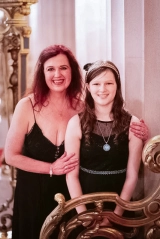
I’ve written books set in a lot of parts of Regency London. But until The Seven Dials Affair, I hadn’t written a book set in Seven Dials, one of Regency London’s most notorious slums. Just on the edge of the theatre district and an easy walk from Mayfair and St. James’s, Seven Dials was a world away from our typical vision of Regency London. I was thinking of this juxtaposition when I chose the photo above of my daughter Mélanie and me at the Dickens Fair last November, dressed up like Rannoch Fraser Mysteries characters on our way to a ball but in the part of the fair representing the London docks.
Originally laid out in the 1690s and intended to be fashionable housing, the Seven Dials area took its name from a central sundial pillar with six faces (with the column itself being the 7th “dial”). The sundial was removed in 1773 and resurrected in Weybridge as a memorial to the Duchess of York in 1820 (a year before The Seven Dials Affair takes place). In the late 1980s a replacement sundial column was commissioned and installed in original spot.
Seven Dials never caught on as housing with the fashionable set and by the Regency it had degenerated into a notorious slum, known for its ginshops. At one point there was a pub at the apex of each of the seven streets facing the dial with passages connecting their cellars and vaults. Those passages play a key role in an action scene in The Seven Dials Affair.
My daughter Mélanie helped me make a video (well actually Mélanie made and edited the video, I just talked 🙂 where I talk about exploring the world of Seven Dials.
What are some unexpected historical settings you’ve enjoyed reading or writing about? Do you prefer reading about the fashionable world or the underworld or books that move in between?
The Seven Dials Affair is out in the world! Thank you to Mélanie for helping me create a video about writing this book, which I’ve been planning since the start of the series.
“we’re out of blueberries, AGAIN! So we have to go get more.”
“Sigh, we can’t. We picked the last of them 3 weeks ago–“
“Which means no more ’till, spring.” said Talea.
“Exactly. But, you can help me look for some pumpkins if you want?” Myoura said with a questionable face.
“Okay.”
Talea and Myoura were searching for pumpkins in silence until Myoura said, “Do you ever wonder if the kingdom survived?”
Talea stiffened. “No, I don’t. Why ask now and not, before?”
“I don’t know, it’s just, well… I want to know if they’re okay. That day…that horrible day–
I need to tell you something.”
Talea’s look changed into question combined with confusion.
Myoura continued. “When the castle got stormed–“
“No, I am not going to try to remember that awful day. I have no intention on remembering and never will.”
“But I need to tell you, Talea, Diamond didn’t attack the castle on her own.”
Talea looked up. “What? Who? Why?” she said.
“The mountain lemurs of Madagascar,” said Myoura. “Led by one named Koto. A said to be reckless ruler. But he’s a lemur, so.”
“We have to take back our kingdom, let’s go.”
Talea and Myoura ran into the kingdom. Or, almost deserted kingdom.
“There’s no one here. Where is, everyone?” asked Talea.
“There!” said Myoura as she and Talea ran to a person, she was dirty and had bruises almost all over her.
“What happened?” Talea asked the person.
The person looked at Myoura, eyes widening. “Gasp! Your majesty!” she said, standing to bow.
“Miss, do you know what happened-“
“You’re the queen! You have come to save us!”
“Do you know–” Talea started but got interrupted.
“Ah, princess!” the person said with yet another bow. “This is wonderful! You can stop the war!”
“What war?” asked Talea.
“The over a century long war, of course.” said the person. “Or as I’ve begun to call it the 3 kingdom war.”
“It’s still going on?” asked Myoura.
“Yes. For 13 years now.”
“Mom,what war!?”
“Sigh, Talea, I, I have to tell you, something.”
Chapter 2 Together
5 months earlier…on earth that is.
“Hello Father I’m back from getting groceries. Father? Maybe you’re downstairs.”
So Diamond decided to go downstairs…
“Diamond, you’re back!”
“Yeah, I am. Are you still working on the portal?” asked Diamond.
“Yes. But unfortunately, it’s been a bust so far,” said Oliver with a frown. “Should I give up?”
“OF COURSE NOT! Have you forgotten why we are doing this? To find Mom and Talea. We can’t and won’t give up.”
“You’re right, Diamond. I’ll keep trying for them.”
Oliver pulled the lever and something happened!
“We did it. Father, we did it!”
On the other side of the portal…
“Mom, tell me what war–“
“A portal,” Myoura whispered. “It’s fading… they won’t be able to make it through. But we can send a letter through it.”
“But can’t they–“
“A glitching portal could destroy the living!” Myoura was going to send the letter when someone came through!
“Diamond?” asked Talea.
“Oliver?” asked Myoura.
“kitty??” asked Talea.
“Talea, Myoura, is it really you two?” asked Oliver.
They were all so surprised they didn’t even notice the portal closed.
“Gasp a portal, hmm, “Pearl said from behind the trees where she was hidden. “Maybe I can make it through without–
Gasp, Oliver? I thought he was dead, or in another dimeson, guess I was wrong. Hm.”
Pearl tried to jump through but…
“Pearl?” said Myoura.
“Uhh hey, sis.”
Chapter 3 …
“Okay so… do we, tie her up again, or?” Talea asked.
“How did she escape?” asked Myoura.
Diamond tied up Pearl. “What? She’s evil!”
“No more than you, I mean you both tried to take over the kingdom, so…” Talea said. “Let’s let her go but, keep her in the kingdom. How’s that sound?”
“Uh excuse me is that the king?” said the person Myoura and Talea were talking to before the portal opened.
“Oh right, Talea there’s a war that’s been going on for 13 years and we need to stop Koto and then the war and the only way to stop the war is well, um, we will talk about it afterwards,” said Myoura.
“Oohhhh I um, that’s my fault, hehe,” said Oliver.
“Hello! What do we do with Pearl?!” asked Diamond.
“Is anyone worried about Koto!?” asked Myoura.
“Can I leave!?” asked Pearl.
“EVERONE QUIET!!” Talea yelled and everyone silenced. “Okay, when we all talk at once, no one, wins. So, why don’t we just, talk one at a time? Mom, you go first.”
“The best thing to do is go take back the kingdom, then we stop the war,” said Myoura.
“But how do we stop the war?” asked Diamond.
“Um, one thing at a time,” said Myoura.
“Okay now, Dad,” said Talea.
“Yeah um, the war’s my fault. Hehe,” said Oliver.
“You started the war!?” asked Pearl. “How!?”
“He insulted the king of Piola.” said Diamond “Then the king of Piola declared, war. Talea was too young to remember.”
“But I’ve met Prince Opal. What a scum,” said Talea.” Anyway Diamond, your turn to talk.”
“What do I do with Pearl?” asked Diamond.
“Keep her tied up. Pearl, your turn,” said Talea.
“Can I leave?” asked Pearl.
“No,” said Talea.
“Okay,” said Pearl.
“Let’s go fight Koto,” said Talea.
PART 10 WILL BE THE BEST EVER!!!!!!!!!!!!!!!!!!!!!!!!!!!!!
At the castle, Talea and Myoura walked in the ashes of the castle burned so long ago.
Talea looked for things to rebuild the castle with when suddenly!…
“Who are you?!” a voice said. But there was nothing there but a pond.
Talea walked to the pond to investigate. The pond was small but well covered in sunlight.
All Talea saw was her reflection Until…a person appeared in the pond! Right next to Talea!
Talea looked beside her but no one was there. “Who are you?” asked Talea.
The person squinted her eyes. “Gasp! Princess.” she said with a bow.
“Mom, there’s uh, a person in, in the pond.” Talea said.
“Princess why so troubled?” asked the person.
“You didn’t answer the question. Who are you?” said Talea.
“I am the girl of reflection. I come in the reflection. From glass, to water.”
Myoura walked over. “But why?” she asked.
“It is clear you need my story.”
“Hundreds of years ago, I came to existence. But, I was not in the village. Not truly.
I was stuck. Stuck in a pond. All my life I have been in a pond… until one day I learned how to move from pond to glass and so much more. any and every reflection was my home.
One day my pond dried and I found this one. I adored rain more than anything.
In the rain I could be as if human. Walk on land. But I was still an illusion.
Never a real human.”
“I’m so sorry,” said Talea.
“It is fine. Oh! By the way my name is Vearora.”
“What a lovely name,” said Myoura.
“Anyway, why are you here?” asked Vearora.
“We are here rebuild our home,” said Myoura.
“This was our home 10 years ago. Till my sister—” Talea cut off.
“The point is we came to rebuild our home,” said Myoura.
“I will help in anyway I can,” said Vearora.
3 months later…
“And done!” said Talea.
“Finally, we’re home,” said Myoura.
Chapter 2 Stone Diamond
“Diamond?”
“Father? Is it really you?”
“Yes. It is me. I thought I lost you.”
They hugged.
“I…I missed you… so, so much, Father.”
“Wait wait, if you’re alive do you know where Myoura and Talea are?” asked Oliver, Talea and Diamond’s dad.
“I’m sorry I don’t know father.”
“Ok, well you’re here. And that’s something.”
“So what have you been doing the past 10 years?” asked Diamond.
“I don’t know. I got a job, A house.”
“But you’re a king. Where is your castle?” asked Diamond.
“Here I am not a king,” said Oliver, with an awkward look.
“But why not?” asked Diamond.
“Well, um… I don’t know how to answer that question. I guess I should show you around,” said Oliver.
“Ok,” said Diamond.
Chapter 3 Back To The Magic
“oh we’re finally home yes finally home,” sang Talea.
“It feels so long is so long why did we not do this before?” sang Myoura.
“Chapter 1 is done but chapter 2 has yet to come,” sang Talea.
“And chapter 2 is coming soon!” sang Myoura.
“Yes chapter 2 is coming soon!” they sang.
So chapter 1 is over. But, I’ll be starting chapter 2 in March sorry for the long wait. I hope you liked my last 8 books. And yeah, please comment ideas. Thank you and happy Valentine’s day.
Talea said, “Ok, ok, this is…not fine not fine at all!”
“Talea?” said Diamond. “Did you follow me here?” Diamond asked.
Talea said “Uuuuuhhhhh………. “This isn’t what it looks like.”
“You knew, you knew didn’t you?” said Diamond.
Talea said, “Of course I knew!”
Diamond shrugged. “How did you know I knew that you knew mom was alive?”
Talea gasped, “You know?”
Diamond widened her eyes. “What else do you know?”
“I know you’re the traitor.”said Talea.
Diamond then ran.
“Diamond? Diamond?! Where are you? Sigh. I have to save Mom.”
Talea then ran to free her mother.
“Talea!” said Myoura. “Thank crystals you’re here.”
“We need Diamond’s help, where is she?”
Talea stayed silent, as she untied Myoura.
She then said, “Diamond is gone. She left.”
“Where’d she go?”asked Myoura.
“In the woods.”said Talea.
“The woods?”Myoura asked.
“YES THE WOODS!!” Talea yelled. “Sigh that’s not important right now. We need to get Pearl under control.”
“Ok,” said Myoura.
Meanwhile with Diamond.
Diamond ran through the forest, hoping she wouldn’t have to face Talea.
Was Talea so angry she would hart her own sister? Diamond wondered.
If so, Diamond was in a terrible situation.
Diamond stopped running, and said, “I wish I could fix this.”
And then… she heard a rustle in the bushes.
“Who’s there?” she said. “I know you’re here! Show yourself!”
And a small kitten appeared out of the bushes.
“Oh, it’s just a kitten. Hello. Where’s your mom?” the kitten blinked.
“You’re not to chatty are you?”
“Well, if you’re alone, then I’ll take care of you. That sound fun?”
The kitten meowed. “Don’t worry, we’ll find the perfect home.”
Meanwhile with Talea.
Myoura said, “I know where Pearl is going.”
Pearl said finally, “I’ll rule a kingdom. Just like my nitwit sister once did.”
“I will soon have all the power hahahahahahhahaha!!!!!!!!!”
“Stop right there!” said Talea.
“Well well well, looks like my niece came to stop me. How’d you know?”
“I’m smarter than you think, Aunt Pearl, if that’s even your real name.”
Chapter 2 the castle
“Where are we?”
“Meow,” the kitten said.
“What is that? Is that a portal? But, portals haven’t been active in hundreds of years.”
“How can it be?”
“Meow,” the kitten said once more.
“Haha. We don’t fit in this world. Mia, we’re going in.”
Diamond and the kitten, Mia, went in the portal, so they could finally, feel, home.
“Where are we?” Diamond said. “Gasp I think it’s the portal realm.”
“Where do you want to go Mia?” Mia went over to a green portal.
“Ok,” Diamond said. And they went through.
Meanwhile with Talea.
Talea and Myoura tied up Pearl. “Talea, we, we have to return to the castle.”
“It’s too dangerous to leave it in ruins,” Myoura said.
Talea said, “i… i… sigh, ok. but the castle is down in ruins. Where will we live? And, what do we do with her?”
Myoura said, “I know our family and the castle are in ruins, but we have each other. And if we can survive 10 years living in the woods, we can rebuild a kingdom.”
Talea raised a brow.
“Ok I know it sounds like a lot of work but we will make it work,” csaid Myoura.
“Ok,”Talea said. And they returned home.
Meanwhile with Diamond.
“Diamond?” a voice said.
To be continued…for Diamond…but not Talea.
After many hours of travel, Talea and Myoura arrived at the castle.
Myoura looked at Talea. “You okay?” she said. Talea didn’t respond, she instead walked forward. Talea finally spoke. “We will rebuild.”
To be continued…
I
I
V
Hey! It’s Mélanie. Just want to tell you all I’d like to hear your opinion on the next book. You know, your ideas. And if you want Diamond to stay in the books instead of going away for awhile, please say so. Thank you and happy holidays!
Diamond said, “Ready to storm the castle?” The lemurs nodded, but when they wreaked havoc,
Diamond realized she made a big mistake.
Diamond said, “You have to STOP, this is wrong!”
The lemurs approached Diamond.
“Wait what are you doing? Oh no they’ve turned on me. If I head into the forest they won’t find me. What was that blur? No matter, I have to leave.”
Meanwhile, in Talea’s dream.
Myoura said to Talea, “Wake up sleepy head.”
Talea said, yawn, “Hi, Mom.”
Myoura said, “Let’s go get breakfast.”
Talea said, “Ok Mom.”
But when Talea and her mom were eating breakfast, the castle was stormed!
But the guards couldn’t keep the castle safe, and the royal family was separated.
And Talea was forced to run!
Then Talea and Diamond woke up from their nightmares.
When they heard a knock on the door, and they panicked, but they got to the door, and it was there Aunt Pearl!
Talea said, “Hi Aunt Pearl!”
Talea and Pearl hugged. Diamond walked over and said, “Hi.”
Pearl said, “Diamond it’s been so long!”
Diamond said, “I’s been 13 Years!”
Pearl said, “So odd.”
Talea said, “I know! Hahaha.”
Diamond wasn’t too happy about Pearl’s visit.
Talea said, “Oh where are my manners, come in, Aunt Pearl.”
Pearl said, “Gladly.”
Talea said, “So this is our house. These are our beds, oh and this our fireplace, we use it to cook food.”
Pearl said, “Nice!”
Talea said, “Are you hungry, Aunt Pearl?”
Pearl said, “I’d love a little bit to eat!”
Talea said, “Great! I’ll whip up some blue berry juice, and soup.”
10 minutes later. Pearl said, “MMM smells delicious!”
Talea said, “Diamond try some, it’s really good!”
Diamond said, “No thanks, Talea.”
Talea said, “Ok, your loss. So Aunt Pearl, where have you been the last 10 YEARS!!”
Pearl said, “So you know I live very very very far away right?”
Talea said, “Yeah, across the world.”
Pearl said, “10 years ago I got a letter saying the castle was stormed, And I got here as fast as I could. I would have been here sooner, but, I live so far away.”
Talea said, “Don’t worry about it, it’s A okay. (-:”
Diamond said, “Well it’s been fun, but I think it’s time for you to go, Aunt Pearl.”
Talea and Pearl said at the same time, “AlREADY??????!!!!!!!”
Talea said, “No n n no she just got here, nope Aunt Pearl is staying.”
Diamond said, “Hey Talea, can I talk to you for a minute?”
Talea said, “Sure.”
Diamond whispered to Talea, “Listen Talea, I’ve got a bad feeling about her, she’s up to something I know it.”
Talea said, “Well you’re wrong!! Listen, you’re the only family member I’ve seen in 10 years!
I need a refresher. )-:<
Diamond sighed, and said, “Well, guess it’s up to me now.”
Talea said, “Sorry about that, Aunt Pearl. Diamond was just umm… was asking if we needed more wood for the fire Hahaha.
Myoura said, “I’m back.”
Talea said, “Yes, I’m back to cooking desert. Hehe blue berry cake. Why don’t you watch, Aunt Pearl? Hehe. (-:>”
Pearl said, “Ok, I don’t see why not.”
Talea looked at Pearl, thinking, “I hope she didn’t see mom.”
If she reveals that mom is alive to Diamond, I can’t imagine what she’d do to me.
But Talea did imagine.
Diamond said, “I can’t believe you lied to me Talea!”
Talea said, “I’m sorry”
Diamond interrupted her, “Don’t Talea. it’s time for you to go. )-:<“
On U.S. Mothers’ Day weekend, it seems a good time to revisit an article I first posted in July 2012. At the end of the movie I Don’t Know How She Does It (based on the novel by Allison Pearson) the Greg Kinnear character describes his wife (played by Sarah Jessica Parker) as “a juggler.” Words which I found very apropos of my own life nine years ago when I first wrote this post, when my own Mélanie was a baby, and still find apropos today. The words are also apropos for Mélanie Rannoch, Kitty, Cordelia, Laura, and Lady Frances in the about-to-be-released The Westminster Intrigue, which sees Mélanie and Kitty on a mission that ends in a knife fight and coming home to check on their children (for that matter Malcolm and Julien are too – fatherhood is also the art of juggling), Mélanie interviewing suspects while she watches the children play in the Berkeley Square garden, Cordelia hosting a ball while trying to be part of the investigation and parent Livia and Drusilla, Lady Frances getting up early the day after the ball (very unusual for Frances!) thanks to the twins.
I wrote nine years ago that I’m very fortunate that my own Mélanie’s temperament and my own schedule make iteasier than I had anticipated to keep up with my writing schedule while being a mom. But it is a juggling act, I said then, whether that means balancing a baby against my shoulder or nursing while I type one-handed, spooning applesauce while I brainstorm with writer friends, doing a book reading aware on the edge of my consciousness of some tiny squeaks as a friend walks with Mel at the back of the room, holding her asleep in my lap on the red eye while I edit on my iPad, having lunch with my agent and editor with Mel asleep in her carrier beside me.
Today the juggling also involves my job at the Merola Opera Program. As well as taking breaks during precious evening and weekend writing time for “mummy daughter time” . One busy Sunday as I finishing Westminster Intrigue I took a couple of hours off for Mélanie to have a play date and all of us to go swimming, and in the end I realized the break was good for me as well as her and got just as much done as if I’d been at the computer all day – because if I had been, I’d have spent a certain amount of time staring into space or scrolling through social media while my brain searched for the next coherent thought.
I think it’s fortunate that my writing process has always involved lots of thinking and mulling time. I wrote in the original post nine years ago about talking with Veronica Wolff, a wonderful writer, fabulous mom, and great friend, about how we can both only write so many words before before inevitably we need to ponder how to handle a transition, a plot development, an upcoming scene (it’s amazing how something as simple as getting a character into or out of the room can stymie one). And a lot of this mulling is subconscious, so I often find I can work through whatever writing issue is plaguing me during a break with Mélanie. It also can play well with having a second job. By the time I get to an evening of writing, some issues have sorted themselves in my subconscious while spending the day at my other job.
Of course some things fall by the wayside – I said that nine years ago and it’s still true today. I don’t blog nearly as much – I hope to get back to it. Nine years ago, I said some days I don’t look at social media at all and then there are other days when I find the one thing I can accomplish while tending to a fussing baby is updating Facebook and Twitter (fairly easy to do one-handed). Now it’s Instagram too and if all I get to is a social media post it’s because I had a late meeting and then spent the evening with Mélanie. (Since COVID, posting a photo every day has become a routine, because it gives me a reason to get moderately dressed up and do my hair and makeup 🙂 Nine years ago I wrote that that some nights I wonder how writing a book with a baby can seem entirely do-able but fixing dinner with one can seem an insurmountable challenge. Fixing dinner is easier now- and my daughter helps -it’s a fun activity to share. And as for my house – well, my friends can attest that I was inclined to let housework go when on a deadline even pre-Mélanie :-). And that hasn’t changed much in nine years :-).
There are days when I feel I’m not getting anything done – that was true then and now. But I have written a book and novella every year since Mélanie born. Even the days when I only write a few hundred words add up over the course of a week or a month. Averaging around 1,000 words a day, most days, works pretty well and is doable – even if those words are sometimes written between midnight and 2:00 am. Snatching moments to write is key. I started my new novella on Thursday night while sitting in the car with Mélanie waiting for the wonderful San Francisco Opera Adler Fellows drive-in concert to start while Mélanie watched Carmen Sandiego on my phone (like me she loves spy stories).
When I wrote nine years ago I had just visited the Stanford campus with friends and I showed Mélanie where Mummy was an undergrad. We went to the History Department, where I learned so much that helps me as an historical novelist. But thinking back to those days of balancing classes, rehearsals, an honors thesis, my first novel (which I was co-writing my mom while in school), I realized that the art of juggling is something else I took away from my university years.
Now Mélanie is writing her own stories, which entails a different sort of juggling – finding time when she can have the computer (those are good moments to clean the house). Having watched me write since she was born, she is wonderfully supportive and understanding. The night I was finishing the Westminster Intrigue copy edits she offered encouragement, helped with proofreading (she caught a misnumbered chapter), and shared her precious York mints to keep me going. Writing is so much more fun with her!
How do you balance different elements of your life, whether it’s writing or parenthood or other elements?












 Tracy Grant - Novelist